
HEART OF THE ART VIENNA
The high-speed train we board in Salzburg takes us to Vienna one of Europe’s most magnificent capitals in about two hours. The moment we step off the train, the city reveals its distinct character and grandeur through its orderly structure and wide, airy streets. Vienna is a city that draws you in not only with its architecture but also with the high quality of life it offers. The reason it has consistently topped the lists of “Europe’s most livable cities” for years is quite clear: a comprehensive transportation network, safe streets that feel peaceful day and night, and an abundance of green spaces within the city where you can breathe and enjoy a variety of activities.
Before we begin exploring this magnificent imperial city, let’s take a brief journey into its history.
A Short Historical Pause: A Strategic City
Located where the Northeastern Alps descend, in the northwest of the Vienna Basin, the city is built along the southern bank of the Danube River. The capital, where German is the official language, holds an important place not only in European history but also in the memory of the Ottoman Empire.
Throughout history, Vienna was besieged twice by Ottoman armies first in 1529 by Suleiman the Magnificent, and again in 1683 under the leadership of Merzifonlu Kara Mustafa Pasha. While both sieges resulted in heavy losses, the failure of the second siege in particular is remembered in Vienna as a great victory. As a symbol of this victory, a sculpture depicting an Ottoman soldier beneath one’s feet was placed at St. Stephen’s Cathedral in the heart of the city. We will return to this famous cathedral in more detail later in the article.
The City’s Grandeur: Baroque Architecture
One of the most captivating aspects of wandering through Vienna’s streets is the splendor of Baroque architecture. The Baroque style is known for its dramatic, ornate, and dynamic structures. Flowing forms, elaborate decorations, large sculptures, high arches, and domes are among its most distinctive features.
The Baroque period emphasizes the interplay of light and shadow, especially in interiors. That’s why simply admiring these buildings from the outside isn’t enough; stepping inside surrounds you with a sense of richness, movement, and depth. Golden details, fresco-adorned ceilings, grand entrance halls… all of these elements reveal the cultural heritage Vienna has carried throughout history. You’ll see this architectural style up close in many of the buildings mentioned later in this piece.
Public Transportation and Ticket Rules
One of the main reasons Vienna ranks at the top of livability lists is its flawless public transportation system. With metros (U-Bahn), buses, and trams, getting around the city is fast, organized, and comfortable.
Before using public transport, you must purchase and validate your daily or single-use ticket from machines or mobile apps. Since Vienna doesn’t use turnstiles, inspection teams may conduct random checks during travel or at station exits. It’s worth noting that fines for traveling without a ticket or with an unvalidated one are quite high.
A Taste Break
You can’t visit Vienna without trying its most famous dish: Wiener Schnitzel. This crispy delicacy made from thinly pounded veal coated in a special breading is fried until golden and served with a light squeeze of fresh lemon juice.
The traditional side dishes are just as carefully prepared as the main course:
Erdäpfelsalat (Viennese potato salad): Made without mayonnaise; its lightly acidic flavor from vinegar, onion, and broth perfectly balances the richness of the schnitzel.
Preiselbeeren (lingonberry compote): In some classic restaurants, it’s added as a small sweet-and-tart surprise that creates a lovely contrast on the plate.
Both visually and in taste, this Viennese classic is a must-try. Now, let’s begin our tour.
With its historic buildings, magnificent cathedrals, imperial palaces, and luxury shopping streets all transformed into a complex work of art through the ornate touch of Baroque architecture Vienna lays out one of the most glorious periods of art history before us. As we walk through the city, we feel as though we’re standing in the middle of a vast open-air museum.
Our first stop is the Kunsthistorisches Museum (Museum of Art History), a magnificent structure built by the last Emperor, Franz Joseph, as a twin to the Natural History Museum next door. It houses one of the richest art collections in the world. The museum is especially renowned for its Picture Gallery, featuring masterpieces by Italian, Dutch, and Flemish masters of the Renaissance. It also includes one of the world’s most comprehensive Near Eastern and Egyptian collections with over 17,000 works, as well as Greek and Roman antiquities spanning 3,000 years of history. Although the entrance fee is around €22, a combined ticket costing €30 granting access to seven institutions including this one is a sensible option for those eager to immerse themselves in culture.
After the Kunsthistorisches Museum, we turn our route toward the magnificent Hofburg Palace, once the main residence of the Habsburg dynasty and the Austro-Hungarian Empire. More than a single building, Hofburg is a vast complex that feels like a summary of architectural history, incorporating Gothic, Renaissance, Baroque, and Rococo styles. The most striking section is the Imperial Apartments (Kaiserappartements), which showcase the living quarters of the imperial family and coronation halls. Don’t forget to visit the Austrian National Library, a true time capsule with roots dating back to 1368 and an archive of 7.5 million works. Outside the palace, you’ll often see historic horse-drawn carriages offering nostalgic city tours, while the elegant square at the back provides a perfect spot to take a break. Sitting at one of the cafés there, watching the palace’s grandeur while observing people passing by, is an experience I highly recommend.
Our path then leads us to Vienna’s heart, the famous shopping street Kärntner Straße. One of the city’s most vibrant and popular areas, it’s lively at all hours and offers everything from luxury boutiques to local restaurants an ideal stop for shopping. At the end of the street, Vienna’s most magnificent structure awaits: St. Stephen’s Cathedral (Stephansdom), the pinnacle of Gothic architecture. As the city’s most important symbol, the cathedral features details inside and out commemorating the victory of the 1683 Second Siege of Vienna. Near the entrance, a sculpture depicting an Ottoman soldier beneath one’s feet recalls this historical event. Inside, you’ll see refined examples of Gothic art alongside lavish Baroque altars, and you can visit the mysterious Catacombs beneath the structure.
Given how much there is to see in Vienna, trying to fit everything into one day would be exhausting. Dividing the trip into days is the smartest choice. Our first day covered the most important cultural and historical sites in the city center. On the second day, we’ll focus on two grand palaces that symbolize imperial splendor: Schönbrunn Palace and Belvedere Palace.
Our first stop on day two is Belvedere Palace, one of the most elegant masterpieces of Austrian Baroque architecture. Built as a summer residence for Prince Eugene of Savoy, the complex consists of Upper and Lower Belvedere, connected by meticulously designed French Baroque gardens. Today, Belvedere houses the largest collection of Austrian art, spanning from the Middle Ages to the present. In its gallery spaces, you must see Gustav Klimt’s gilded masterpiece “The Kiss,” the main reason art lovers flock here. The palace’s grandeur and rich collection make it one of Vienna’s cultural icons.
Next, we head to the enormous Schönbrunn Palace, located slightly outside the city center and listed as a UNESCO World Heritage Site since 1996. Known as the Habsburgs’ summer residence and welcoming around 8 million visitors annually, the complex feels like a world of its own.
What makes Schönbrunn unique is its vast grounds filled with magnificent landscape designs, historic fountains, and endemic plant species. Within the palace grounds, you’ll also find the world’s oldest zoo (Tiergarten) and the Imperial Carriage Museum, among many other fascinating spots. It’s a place that will easily take up hours of your time and may well become the most enjoyable stop of your Vienna trip. At the far end of the gardens stands the Gloriette, commissioned by Empress Maria Theresa, offering a breathtaking view of the palace and the city. With Schönbrunn’s imperial magnificence and Belvedere’s artistic heart, we complete a rich and fulfilling second day and move on to our final day for the finishing touches.
After two days of visiting some of Vienna’s and the world’s most magnificent palaces, cathedrals, and museums, we’ve traveled through time and experienced imperial splendor. Now, at a calmer pace, we’ll focus on the city’s in-between beauties and structures that complete its spirit.
Our final day avoids long museum queues and instead enjoys the architectural feast offered by the Ringstraße. Our first stop is Votivkirche, built in memory of an assassination attempt on Emperor Franz Joseph. With its Neo-Gothic towers, the church takes on a different atmosphere at night when illuminated in purple.
Next, we head to Vienna City Hall (Rathaus), another Neo-Gothic masterpiece that serves as the center of local government and hosts festivals throughout the year. Especially in summer, you should visit the open-air cinema set up in front of it, or the Christmas markets held there in winter.
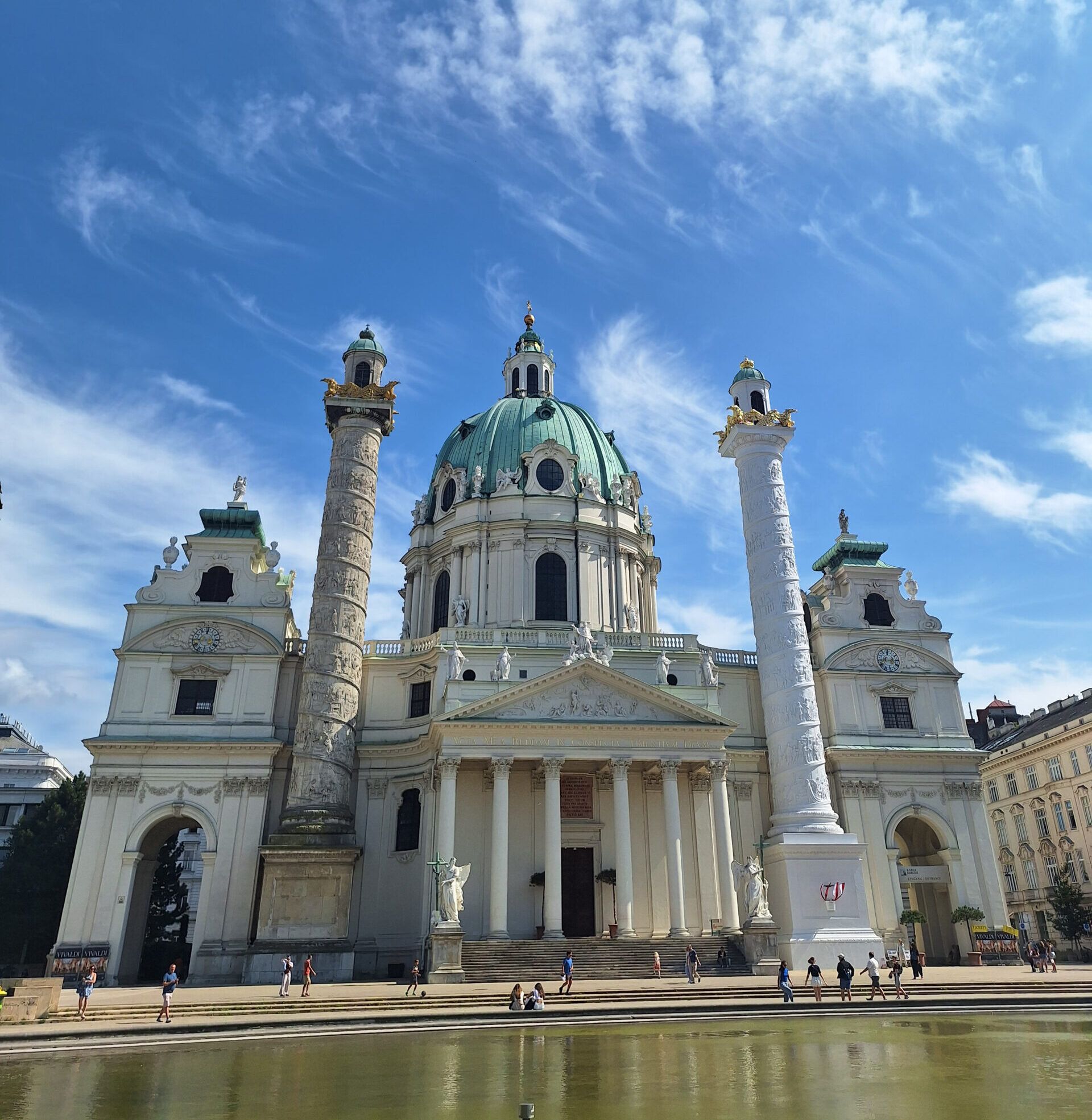
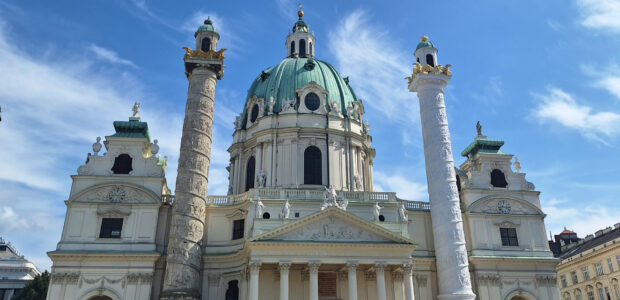
Our final stop is Karlskirche (St. Charles Church), which blends architectural influences from different cultures. Built in memory of a plague epidemic, its unique façade ranging from Roman Baroque elements to Trajan Columns showcases Vienna’s artistic diversity.
Before concluding our history-filled Vienna journey, we can’t skip the final cherry on top. Of course, a Mozart orchestra performance at the Vienna State Opera is the perfect way to let the spirit of this city after exploring every corner sink into our ears and souls, creating an unforgettable memory.
After three days filled with historic buildings, magnificent palaces, and cultural richness, Vienna leaves us with an unforgettable experience. I highly recommend adding Vienna to the top of your list when planning your next trip. Whether you’re strolling among imperial and Baroque architecture, sipping coffee at a café, or losing yourself in a Mozart performance, you’ll understand firsthand why this city is considered one of Europe’s most livable and enchanting capitals. I hope this article inspires and guides you as you plan your own Vienna adventure. See you on the road…