
MUNICH, GERMANY’S MOST COLORFUL CITY
Hello everyone! Today, I’m going to tell you about Munich, the capital of Germany’s Bavaria region.
When people think of Germany, many imagine a work-focused, disciplined, and routine lifestyle compared to other European countries. This perception often reflects on city life as well. Some travelers who choose Germany for a vacation may find this disciplined and orderly structure a bit boring. In a way, that’s not entirely wrong you might not always find the lively, entertaining atmosphere you expect in every city. But whether it’s fair to go to Germany with that expectation is open to debate.
What truly sets Germany apart is its position as the world’s fourth-largest economy, its leadership in the automotive industry (BMW, Mercedes, Audi, Porsche, and more), its strong focus on research and development, and the highly qualified workforce shaped by its universities. The country is also incredibly rich in culture and the arts; world-renowned figures such as Kant, Hegel, Beethoven, Goethe, and Peter Paul Rubens all emerged from Germany.
Urban design here is equally impressive. Green belts stretching across the city, an extensive public transportation network, bike and running paths, wide sidewalks, and strict traffic rules are among the first things that catch your eye.
German cuisine is at least as famous as its cars. Bratwurst grilled sausages go perfectly with mustard and bread. Slow-cooked meats like Sauerbraten, potato salad, and red cabbage are common favorites. For dessert, Apfelstrudel and Black Forest cake stand out. And of course, in Bavaria, beer and large crispy pretzels are practically symbols of the region.
Despite all this making Germany sound rather routine and dull, let’s now move on to the colorful city of this “supposedly boring” country: Munich.
If you arrive in Munich by FlixBus, your first stop will be the Munich Central Bus Station. Take a deep breath because now we’re entering Munich, Germany’s rebellious child! Once you leave the terminal, you’ll see the Hackerbrücke tram stop. After about two stops, you’ll be very close to the city center. I chose to walk instead; strolling along Munich’s wide sidewalks and green-lined streets is a real pleasure, and it also gives you a chance to observe local life.
As you reach the center, you’re welcomed by Karlstor Gate. One of Munich’s old city gates, it marks the western entrance to the old town. Dating back to the Middle Ages, the gate was decorated in Neo-Gothic style in the 19th century blending history with a touch of grandeur. Once you pass under the arches, you’ll find long shopping streets, street musicians, local food, and of course, plenty of places to enjoy a beer. While you’re here, stop by the Bayern Store, try some local beers, and don’t miss white sausages and schnitzel.
The first major building you’ll encounter along the street is St. Michael’s Church. Its exterior design is quite different from many other European churches, and its elegant interior is absolutely worth seeing. Dominated by white tones and adorned with numerous angel and saint statues, it’s one of Munich’s largest Renaissance churches. Inside, you’ll also find the tombs of the Bavarian royal family.
After leaving the church, you’ll come across Frauenkirche, the iconic symbol of the city. Built in the Late Gothic style, this impressive structure was heavily damaged during World War II but later meticulously restored. Right next to it is a small and charming spot called Wasserglockenbrunnen. Locals gather around, sit beneath the trees, and cool off by dipping their feet into the bubbling water hence its nickname, the “water mushroom.”
Feeling refreshed, we continue on to Marienplatz, the very heart of the city. It’s almost impossible to move through the crowd street musicians in one corner, tourists busy taking photos in another, and locals calmly sipping their coffee nearby. The square is surrounded by the Neues Rathaus, built between 1867 and 1909 in Neo-Gothic style, famous for its intricate stonework, tall towers, and the iconic Glockenspiel clock.
When you feel like stepping away from tourist hotspots and blending in with locals, Viktualienmarkt is the place to go. In this open-air market, you can try affordable local delicacies and observe everyday Munich life up close.
If the crowds start to feel overwhelming, let me take you to Hofgarten. Located right in the center of Munich, it’s an ideal place to find peace. This Renaissance-style garden next to the palace features neatly trimmed lawns, flowers, and elegant pathways. The Diana Fountain and surrounding statues add a refined charm, making it a perfect spot to relax and enjoy a beer.
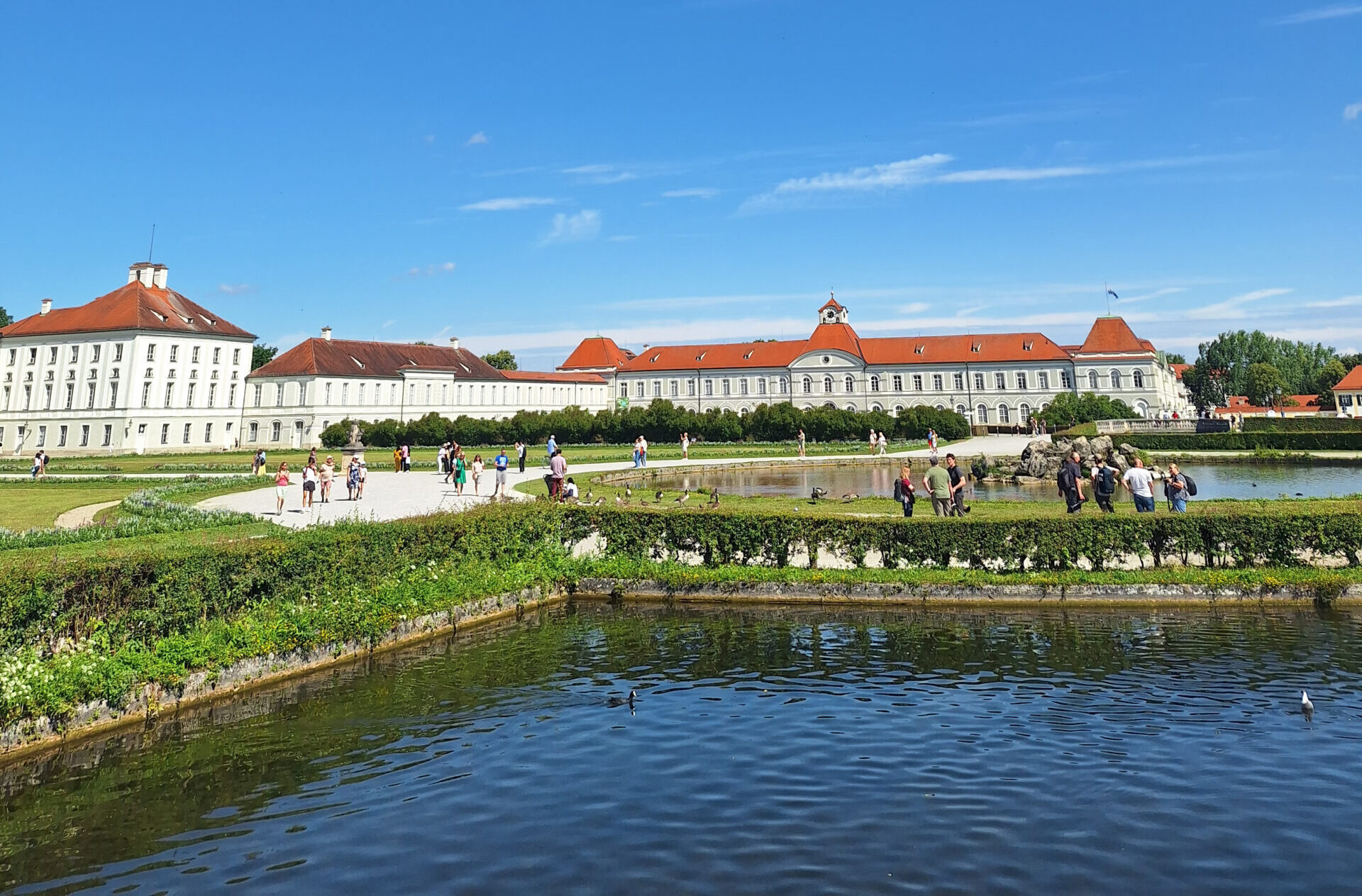
Now let’s head a bit outside the city center to visit another masterpiece: Nymphenburg Palace. Once the summer residence of the Bavarian royal family, it eventually grew into a vast palace complex. Its grandeur comes mainly from Baroque architecture, later enriched with Rococo and Neoclassical elements.
The expansive gardens feature statues, ponds, and a long canal stretching toward the Hubertusbrunnen. Walking along this canal and the surrounding green paths is incredibly calming. The gardens resemble English landscape design and are filled with beautiful scenery. Especially in summer, wandering here and watching the swans feels like stepping into a fairytale.
Now we’re moving on to my personal favorite spots in Munich! First stop: Alte Pinakothek, a paradise for art lovers. Opened in 1836 by Bavarian King Ludwig I, the gallery suffered major damage during World War II before reopening in 1957.
Inside, you’ll find European masterpieces from the 14th to the 18th century, spanning from the Renaissance to the Baroque period. One must-see is Peter Paul Rubens’ The Fall of the Damned. Depicting the descent of the damned from heaven into hell, the painting draws you in with its darkening tones and the fear etched onto every figure’s face. Standing in front of it for a while, studying the details, is guaranteed to send shivers down your spine.
Next up is a place that will captivate science and technology enthusiasts: the Deutsches Museum. Opened in 1903, it’s one of the largest science and technology museums in the world. From aircraft and astronomical research to hands-on experiments, it showcases why Germany is a global leader in innovation. The museum is massive you’ll definitely need several hours to explore it properly.
Finally, if you have extra time, the BMW Museum is a must for car lovers. And if there happens to be a Bayern Munich match while you’re in town, don’t miss it. If not, you can still take a stadium tour accompanied by chants of Seven Nation Army. Beyond that, visit Eisbachwelle to watch surfers riding artificial waves, then head over to the vast English Garden nearby. Put on your headphones, play some music, and lose yourself among the greenery. For those curious about royal history, the Munich Residenz offers a true journey through time with its opulent rooms and jewel collections.
One last small but important note: Oktoberfest. When you think of Munich, Oktoberfest is often the first thing that comes to mind. Its origins date back to 1810, when it began as a wedding celebration for Crown Prince Ludwig of Bavaria. Over time, it evolved into the massive festival we know today. It’s no longer just about beer giant tents, traditional music, Bavarian cuisine, colorful outfits like dirndls and lederhosen, and even amusement rides all come together. The city’s energy during this time is completely different, and if you’re in Munich, it’s something you shouldn’t miss.
That wraps up my Munich journey with you. Even though this is my very first blog post, I tried my best to convey the city’s colors, history, and spirit. I hope that while reading, you both enjoyed yourself and felt as if you’d taken a small trip to Munich.
Until the next post where more discoveries, flavors, and fun await. Thank you for reading, and remember:
Travel is an adventure that grows the more you see.